Autonomous Air-Taxi
Luma
Ilona Porfirova
Turning Stressful Seattle Commutes into Happy Hours :)
The Brief
LUMA
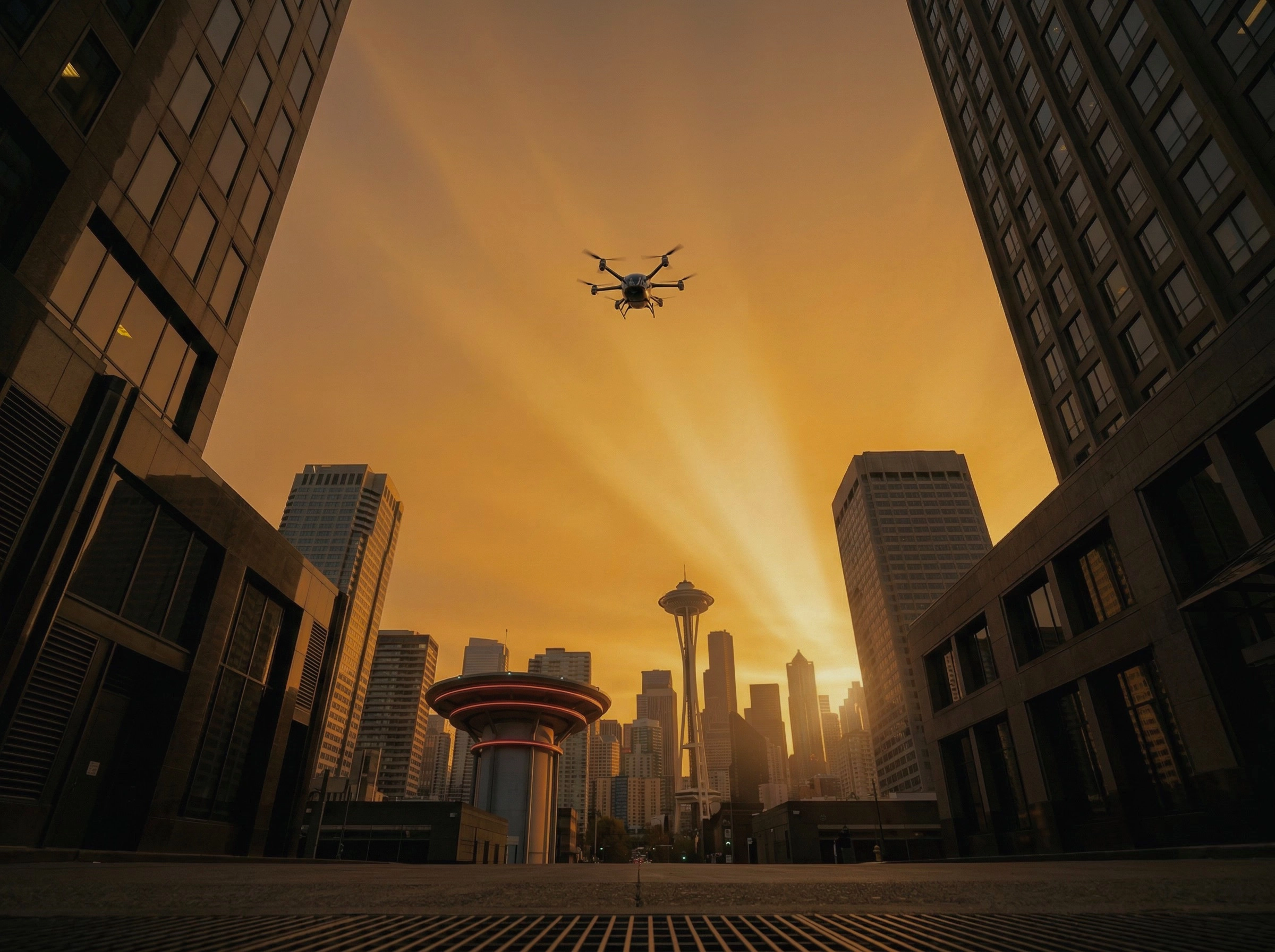
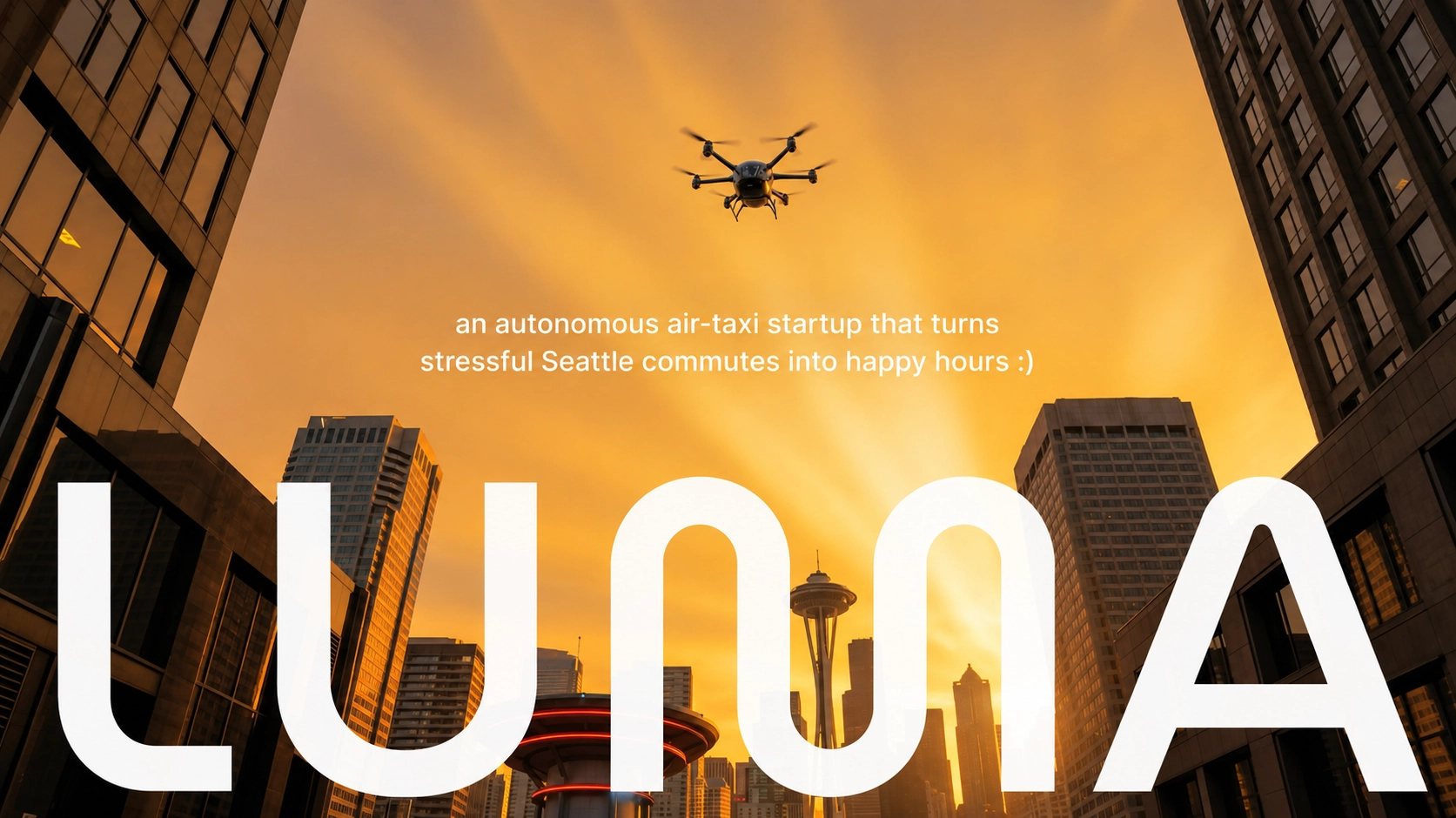
LUMA is an autonomous air-taxi service designed to bypass urban gridlock. By applying Human-Centered Design (HCD) to urban air mobility, LUMA transforms unpredictable commutes into restorative, efficient, and mentally clear experiences.
Design Context
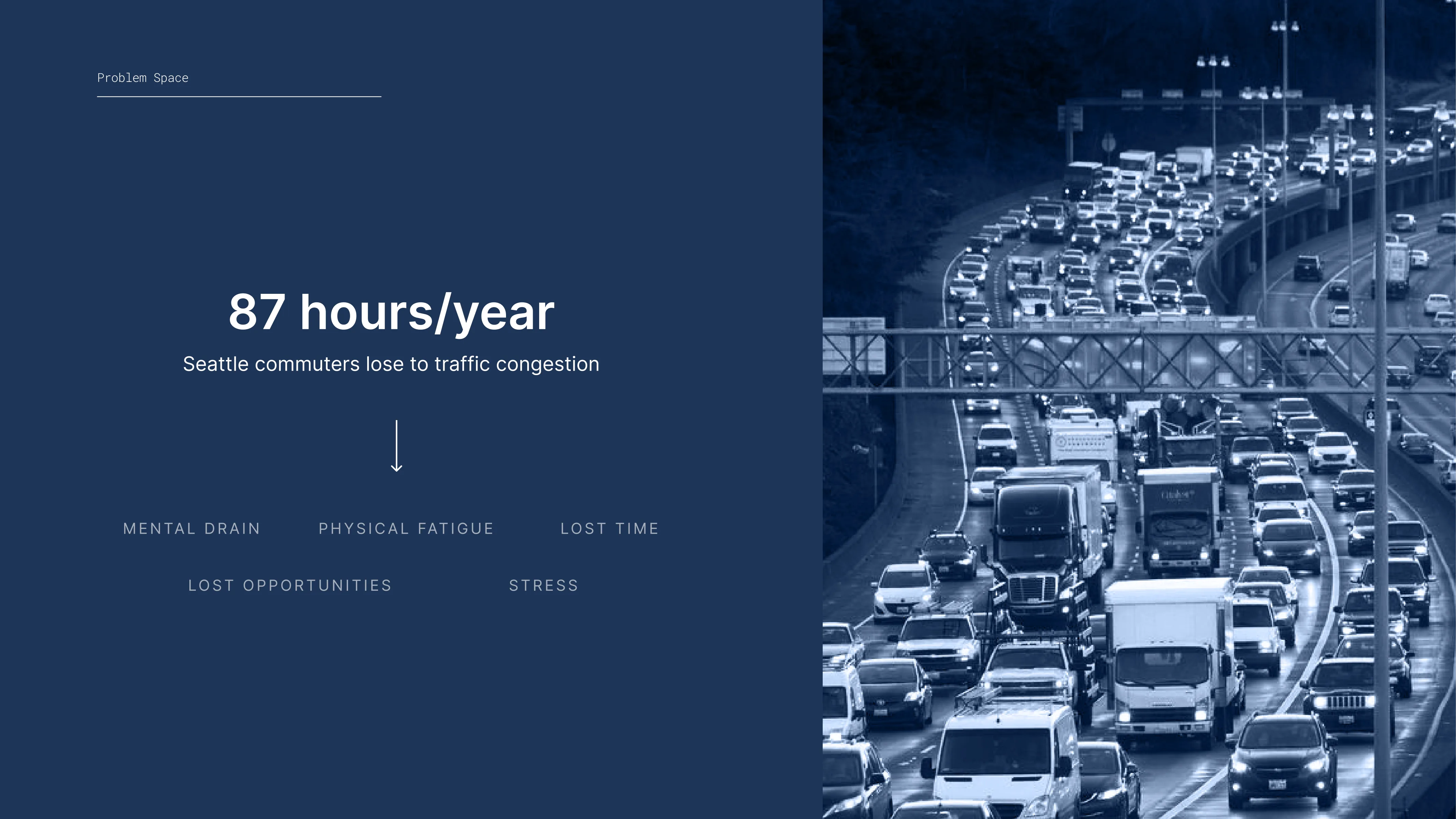
- Seattle Congestion: Seattle ranks as the 10th most congested city in the U.S., with drivers losing 87 hours annually to traffic.
- The Unpredictability Factor: Commutes fluctuate wildly—such as a 20-minute drive unexpectedly taking 90 minutes—causing severe mental drain, physical fatigue, lost opportunities, and stress.
- Infrastructure Limits: Expanding highway lanes has failed, making it necessary to transition urban transit from ground roads to the sky.
Goals
Future of Commute
- How Might We: How might we redesign urban commuting so that time in transit becomes efficient, predictable, and mentally restorative?
- Target User Persona: Daniel Mercer (47, Managing Partner at Meta), who commutes between Bellevue and South Lake Union (45–75 min peak). He values time over status and requires schedule predictability, mental clarity before meetings, and seamless airport transfers.
- Core Objective: Reclaim lost commuting hours so passengers can spend their time resting, connecting, or creating.
Field Research
Market Gap & Strategic Specification
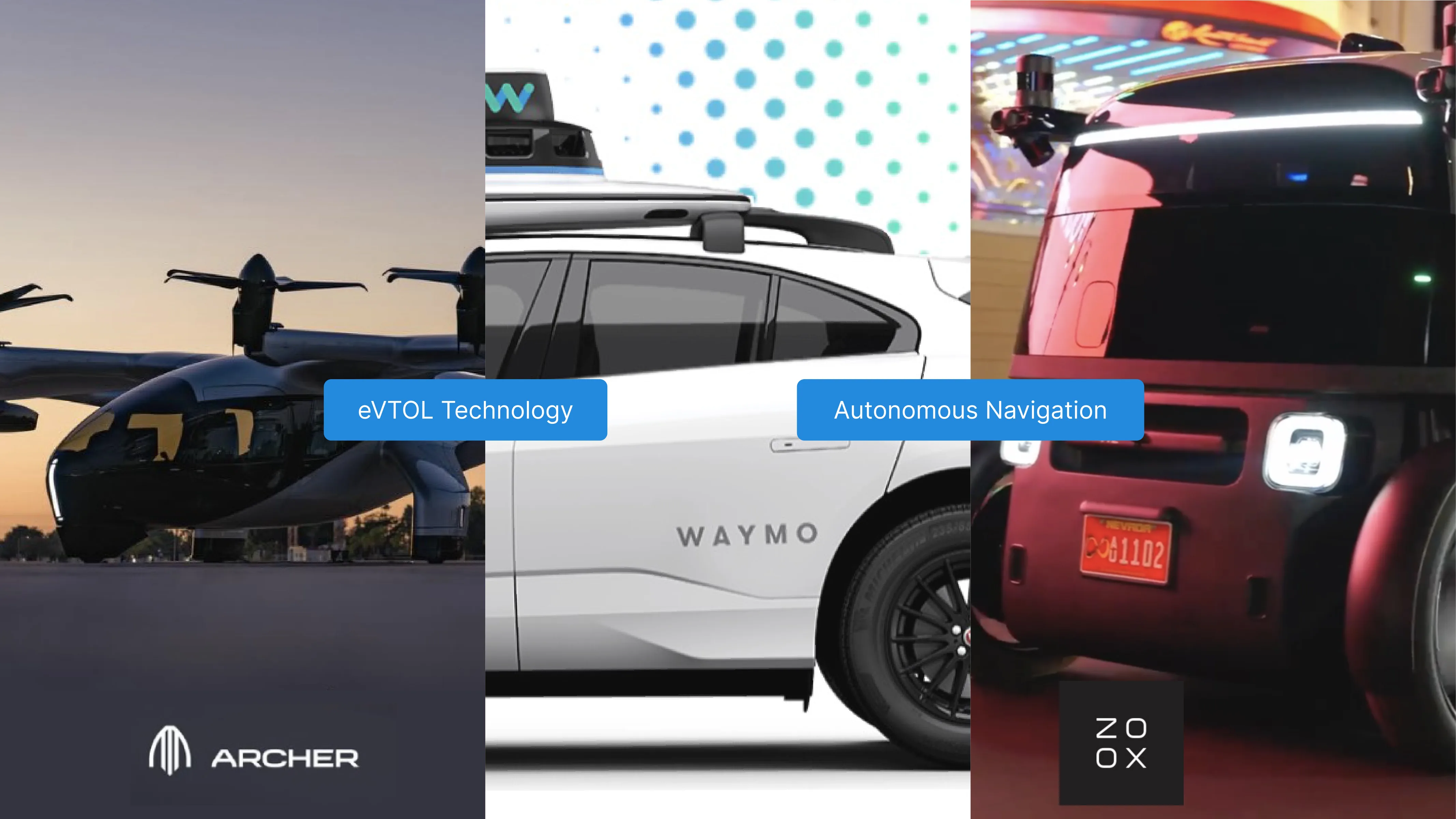
- Competitive Landscape: Direct Competitors (Joby, Archer, Volocopter, EHang): Offer quiet electric VTOL technology but focus on functional design with minimal passenger comfort or infrastructure integration.
- Indirect Competitors (Uber Black/Reserve): Provide luxury on-demand booking but remain trapped in ground traffic with no time compression.
- Substitute Competitors (Helicopters, Private Jets): Offer fast travel but are loud, pilot-dependent, non-eco-friendly, and airport-constrained.
System Architecture
Iterations
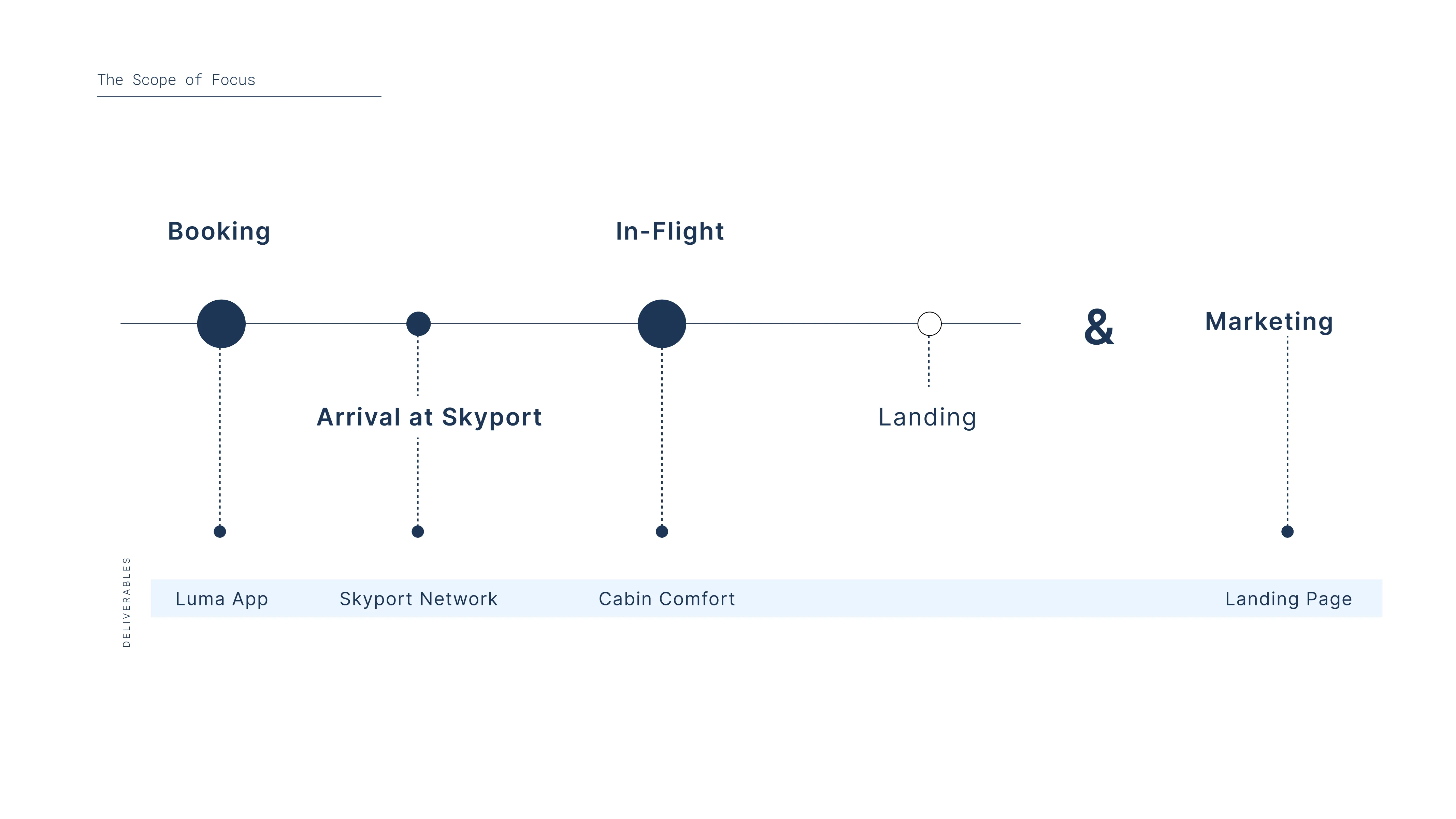
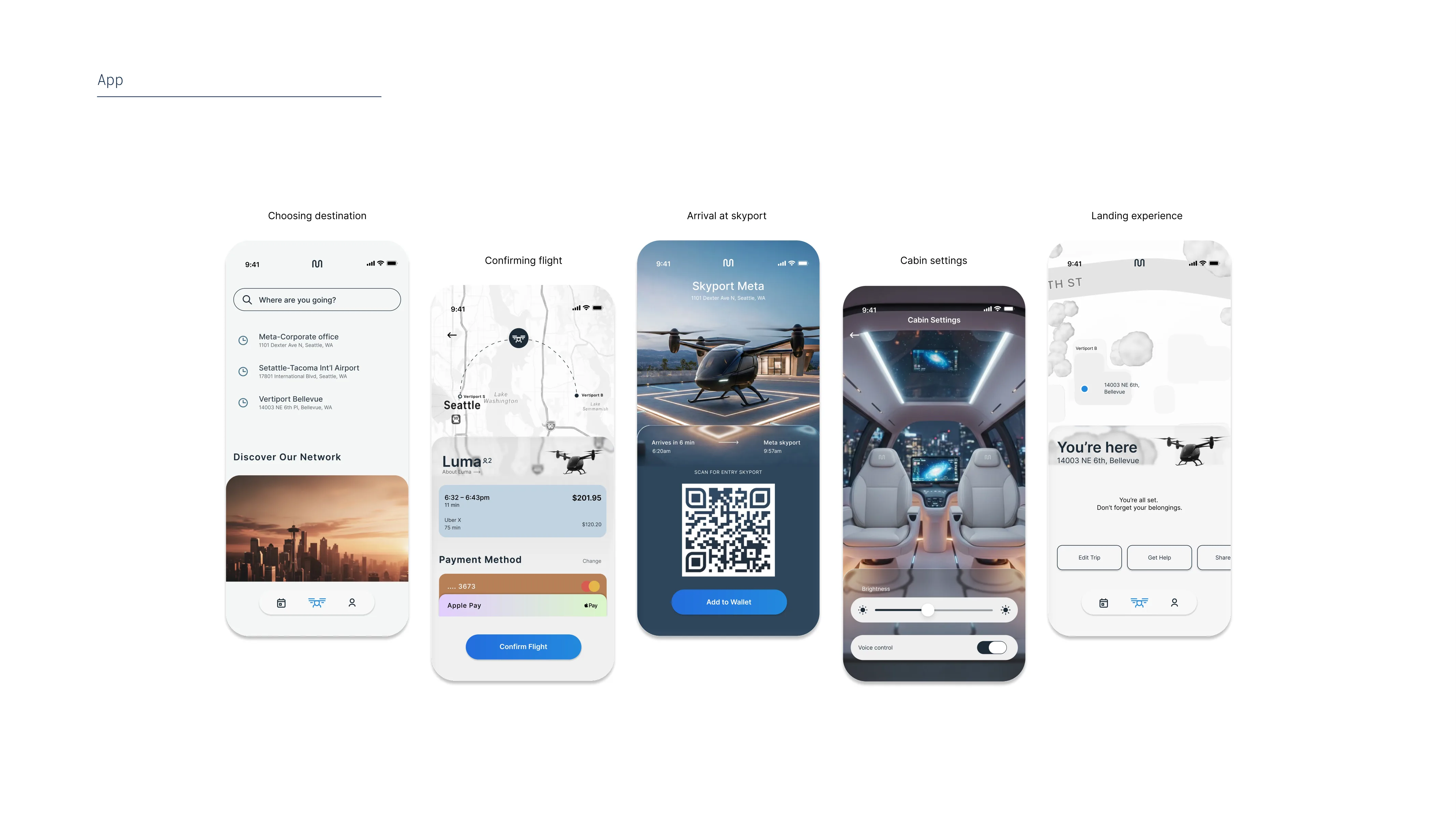
- The Luma Mobile App: Refined through user testing and guided by Jakob's Law to maintain intuitive navigation. Features search destinations, fare transparency ($201.95 Luma vs. $130.30 ground ride-share), Skyport QR entry codes, in-flight ambiance controls, and landing touchdown alerts.
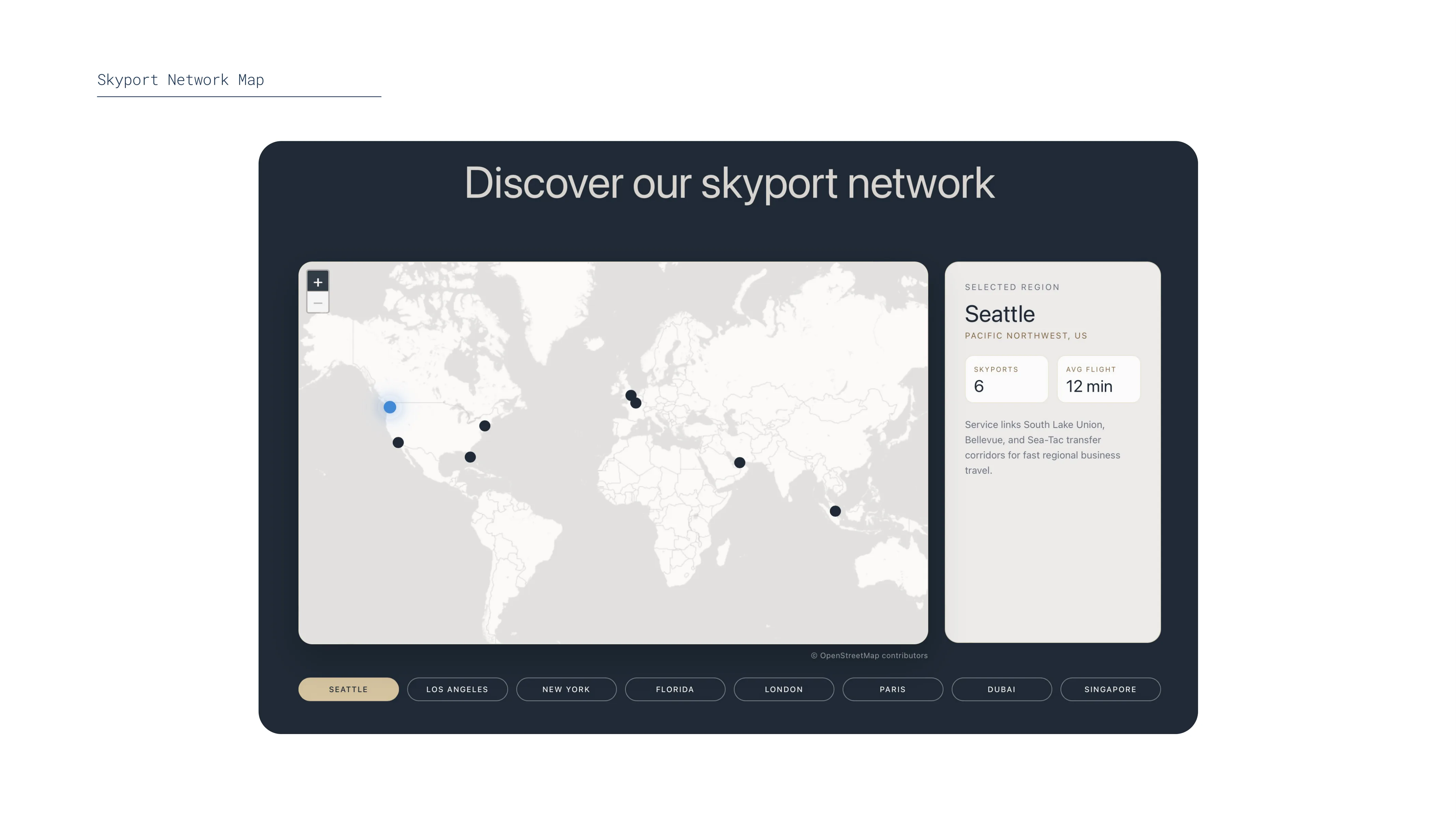
- The Skyport Network Map: Redesigned from a low-contrast draft into a high-visibility map showcasing 6 Seattle skyports (averaging 12-minute flight corridors linking South Lake Union, Bellevue, and Sea-Tac) with global expansion projections.
- In-Flight Cabin Experience: Evolved from an early car-seat layout into a pilot-free, sound-insulated pod equipped with panoramic views, ergonomic seating, onboard Wi-Fi, chargers, and custom light/voice controls.
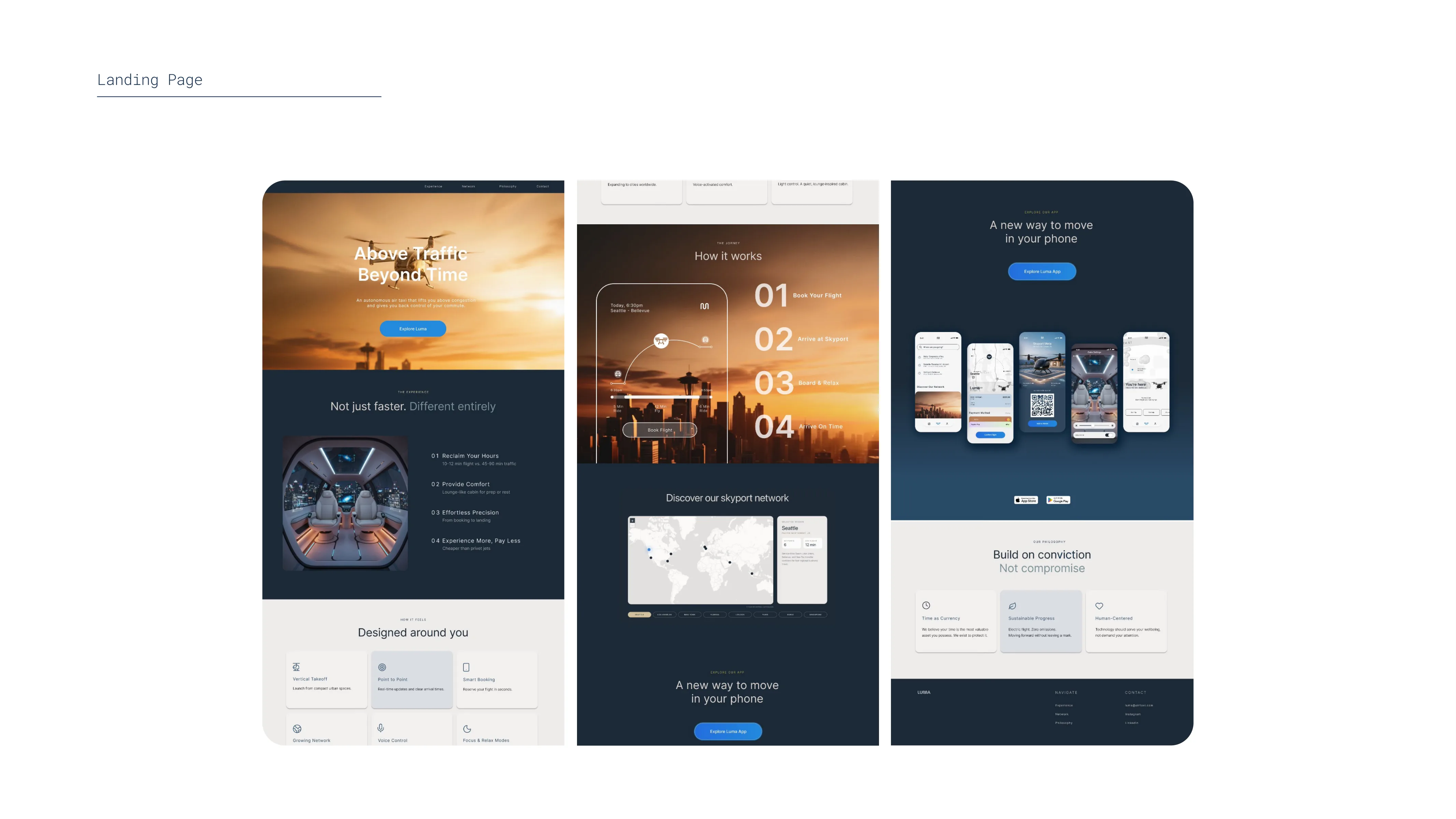
- Marketing Landing Page: Reorganized after testing to explicitly map out the full journey (booking to landing). Integrated smooth reveal animations and a looping video header via vibe-coding motion design to reflect a seamless flight experience.
Future Vision
Next Steps
- Testing & Promotion: Validate safety, comfort, and pilot-free operations through end-to-end trial flights with journalists.
- Accessibility Infrastructure: Implement wheelchair-accessible boarding procedures and dedicated in-cabin placement to ensure independent travel.
Reflection
Outcomes & Synthesis
- Impact: Demonstrates how human-centered design applied to urban air mobility can return valuable time to commuters while serving as a strategic blueprint for Seattle and other major metropolitan areas.
- Reflection: Emphasizes the importance of justifying user-focused design decisions over tech-heavy gimmicks, highlighting how vibe-coding motion and parallax effects enhanced digital engagement.
See more work
The portfolio is deep. Keep moving. There is more to see and more to learn.