Organic Biomimicry in Interactive Lighting
Tulip Lamp
Viktoriia golovey
This project explores how natural form and biomimicry can inspire industrial design and interactive home lighting. By observing the structural elegance of tulips in nature, designer Viktoriia Golovey translates organic botanical geometries into a sound-controlled ambient lamp.
The Brief
Tulip Lamp
Investigate how organic forms from nature serve both aesthetic and functional roles across architecture, engineering, and product design, and apply these principles to create an original lamp concept.
Design Challenges
- Form Translation: Translating a soft, dynamic organic flower into a precise 3D digital model using Blender while retaining its natural aesthetic.
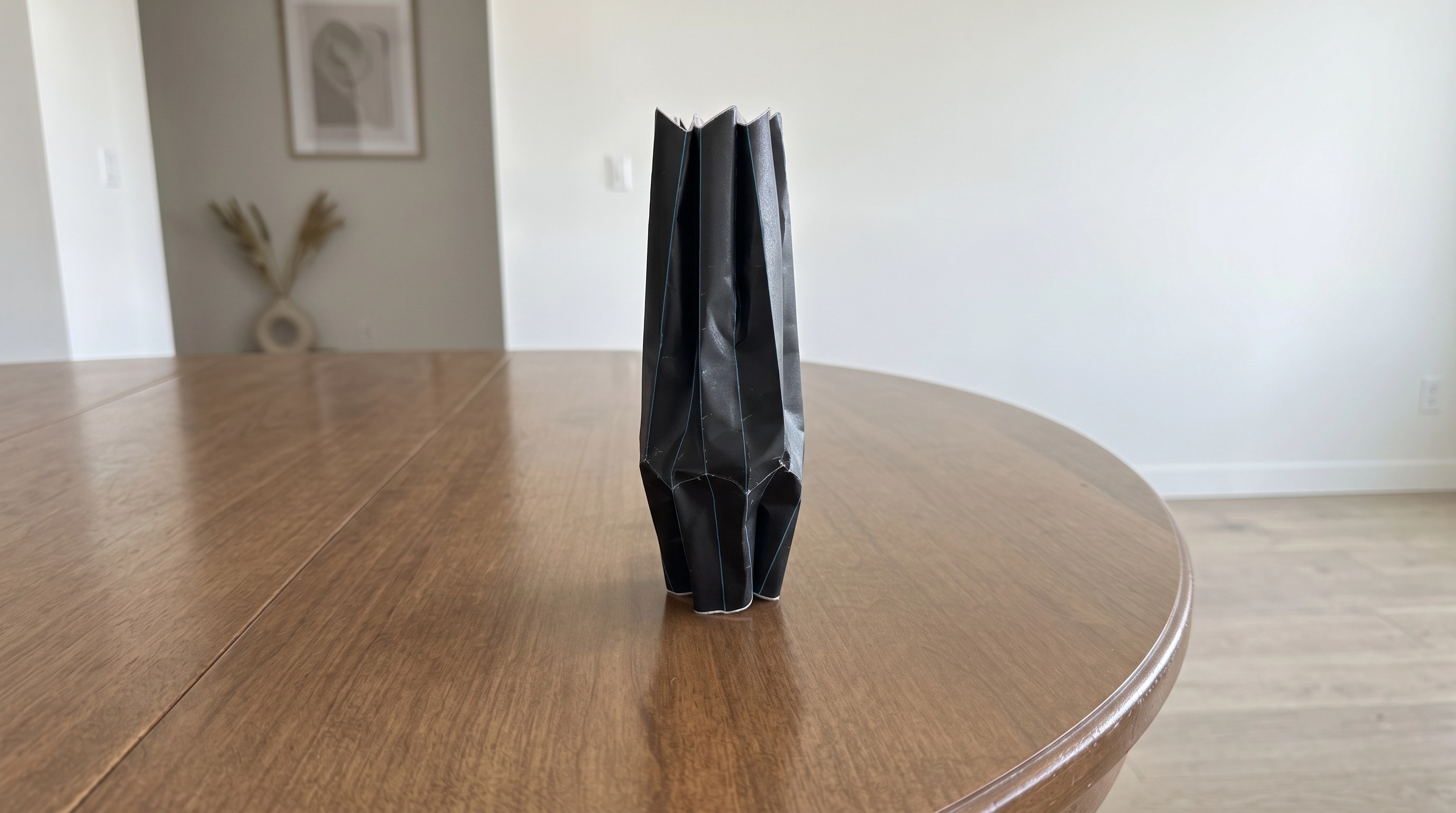
- Physical Prototyping: Paper folding assembly tests revealed spatial proportion issues, showing that the lamp shade required a wider middle and improved volumetric proportions before 3D printing.
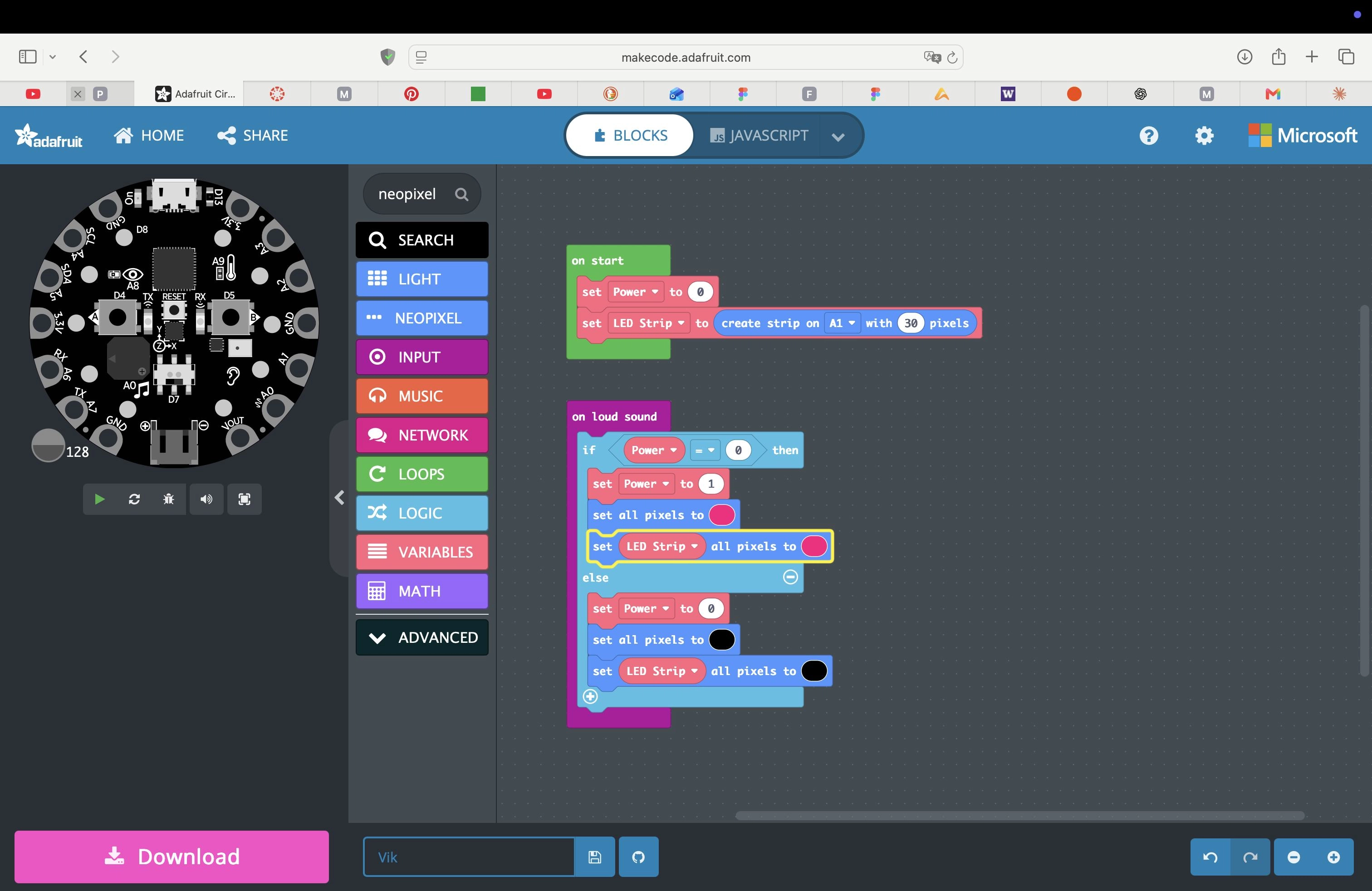
- Interactive Electronics: Programming and calibrating sound sensor code on a Circuit Playground Express (CPX) board to reliably switch ambient LED lighting on and off.
Discovery
Natural Inspiration
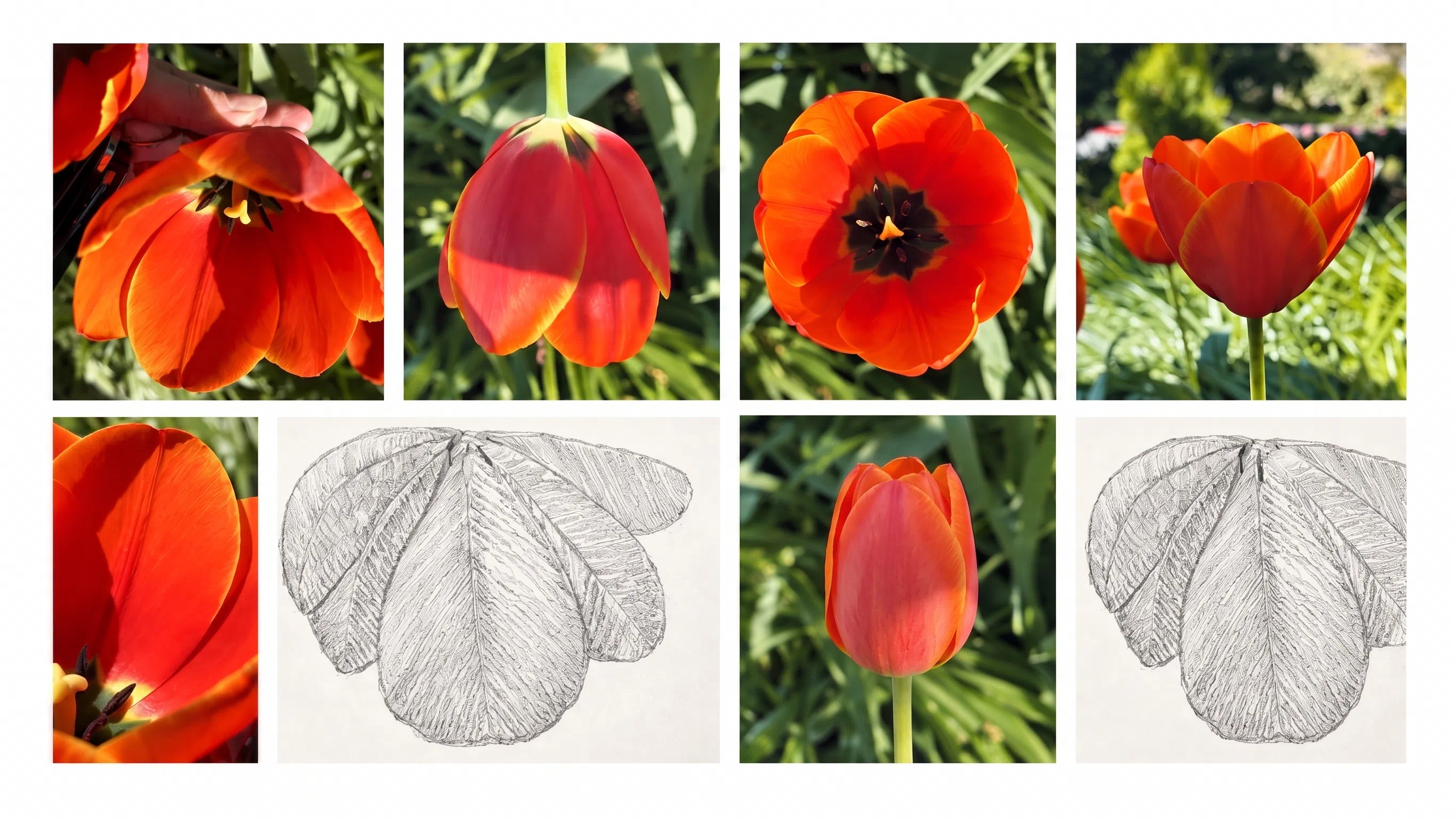
- Object Discovery: During a walk in nature, bright tulips growing together caught attention due to their distinct, harmoniously simple form.
- Petal Anatomy: Each flower features six large, oval-shaped petals with a subtle top notch, thin delicate textures, and fine lines running toward the center.
- Dynamic Geometry: Tulips present a cup-shaped form resembling an upside-down bell with a sharp base. Their shape dynamically changes across the day as petals open in the morning, close at night, and reveal new positions when viewed from different angles.
Form Analysis
Precedents in Design
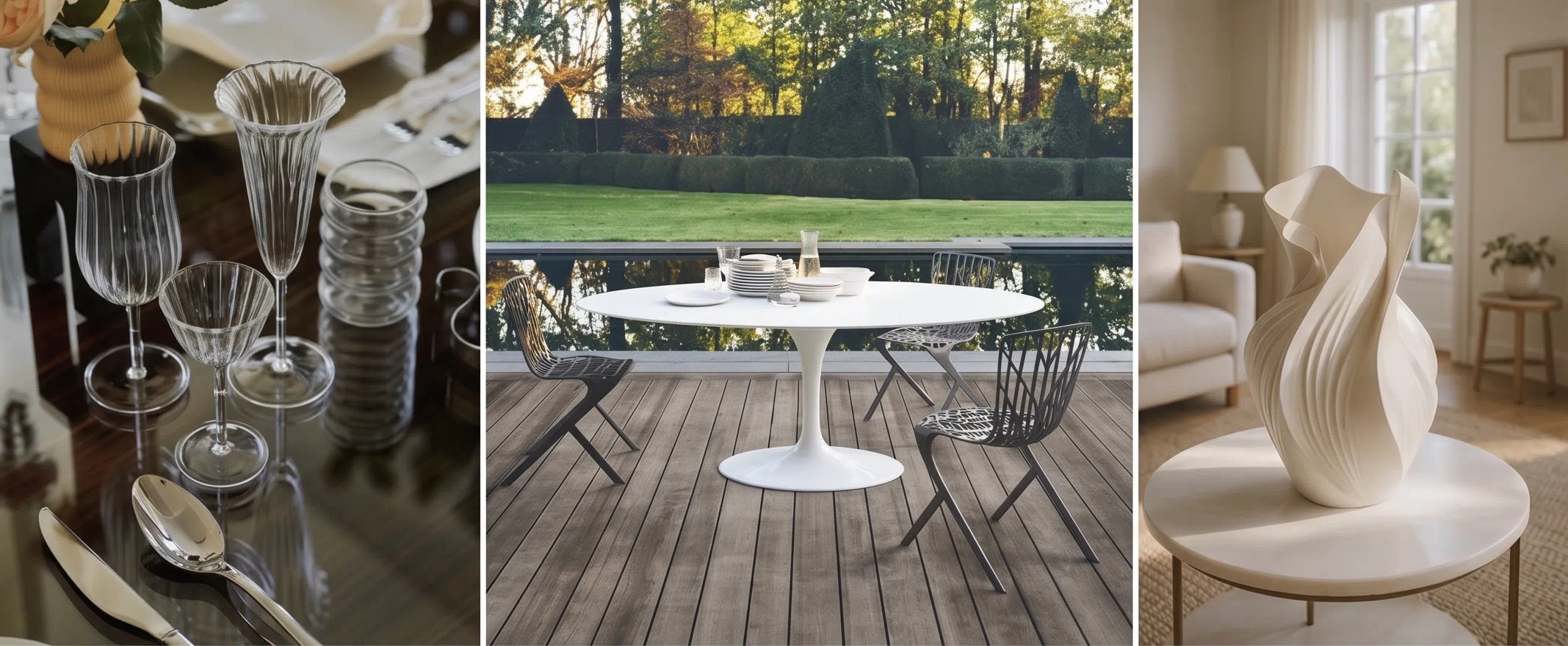
- Architecture: Tulip forms inspire iconic structures like Little Island at Pier 55 in New York (built with 132 tulip-shaped precast concrete planters on 267 piles) and the ArtScience Museum in Singapore (where cut petal forms enhance natural airflow, light diffusion, and acoustics).
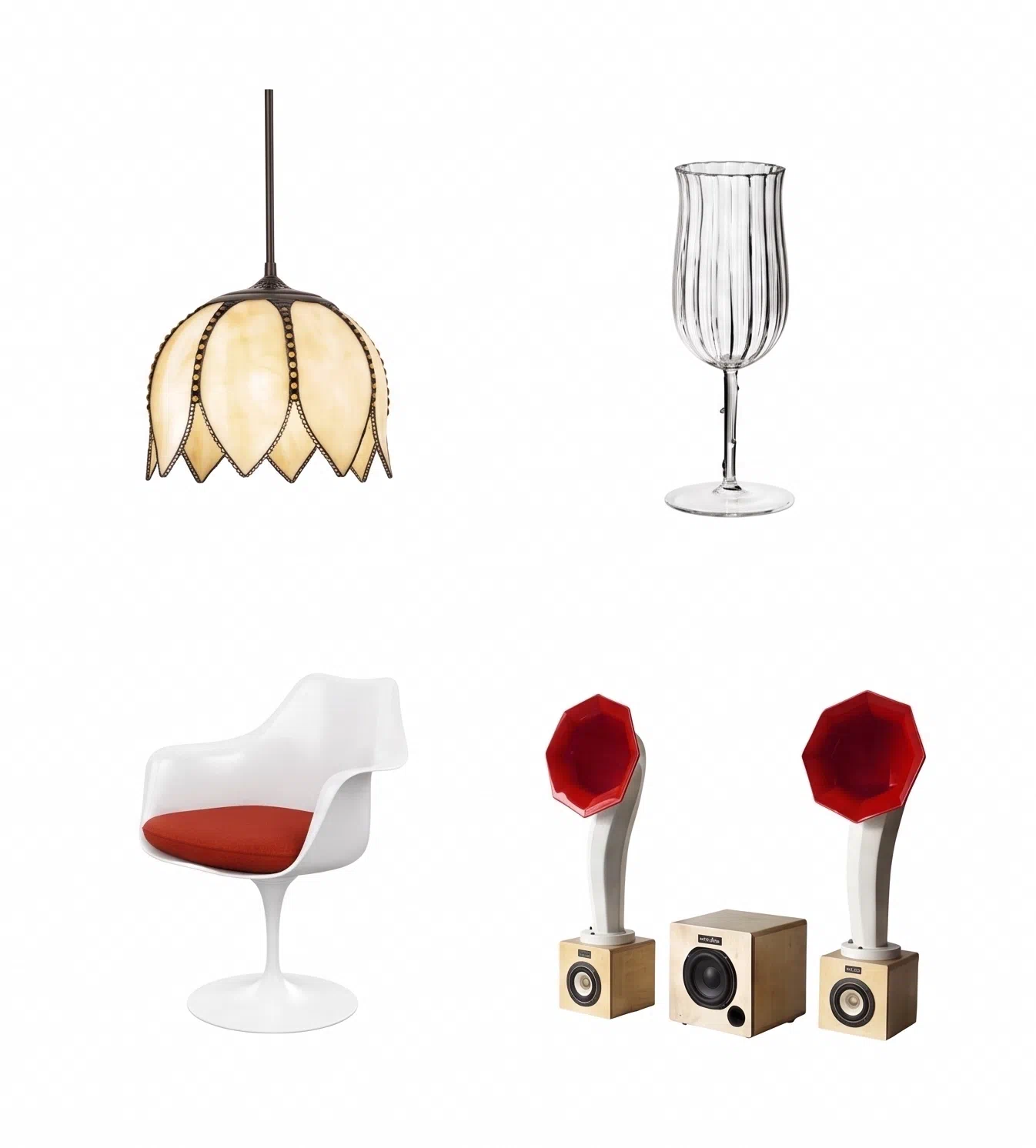
- Industrial Design: Eero Saarinen’s 1956 Tulip Chair removes cluttered legs in favor of a central stem-like base. Similarly, tulip-inspired lights diffuse glare, while tulip-shaped glassware preserves wine aromas.
- Engineering: Flared acoustic horn speakers use tulip geometry to amplify sound clearly with minimal power. Kitchen mixers move liquids efficiently using tulip-shaped bowls, and soft robotic grippers use flexible petal fingers for gentle handling.
Technical Logic & Execution
Ideation
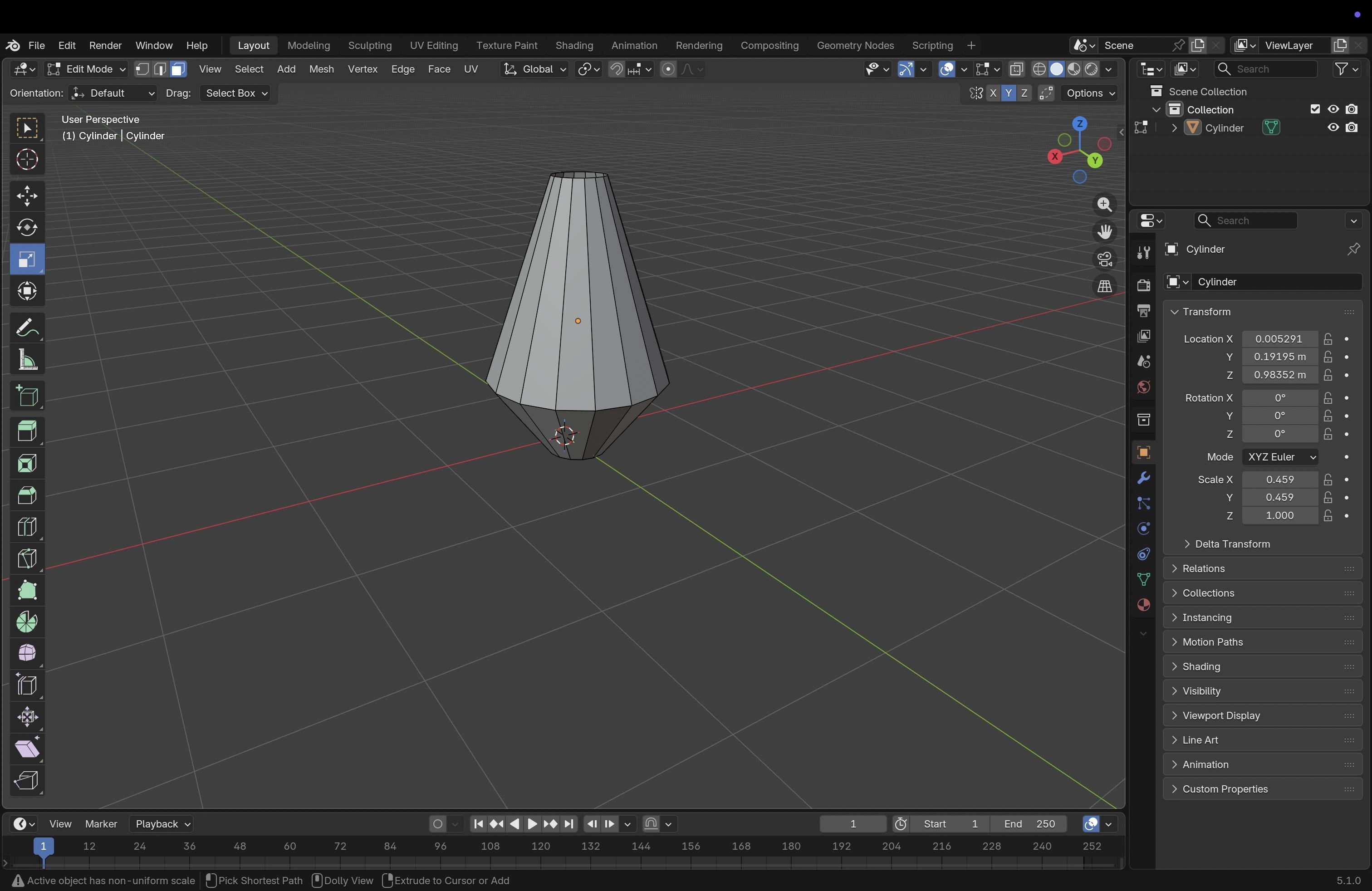
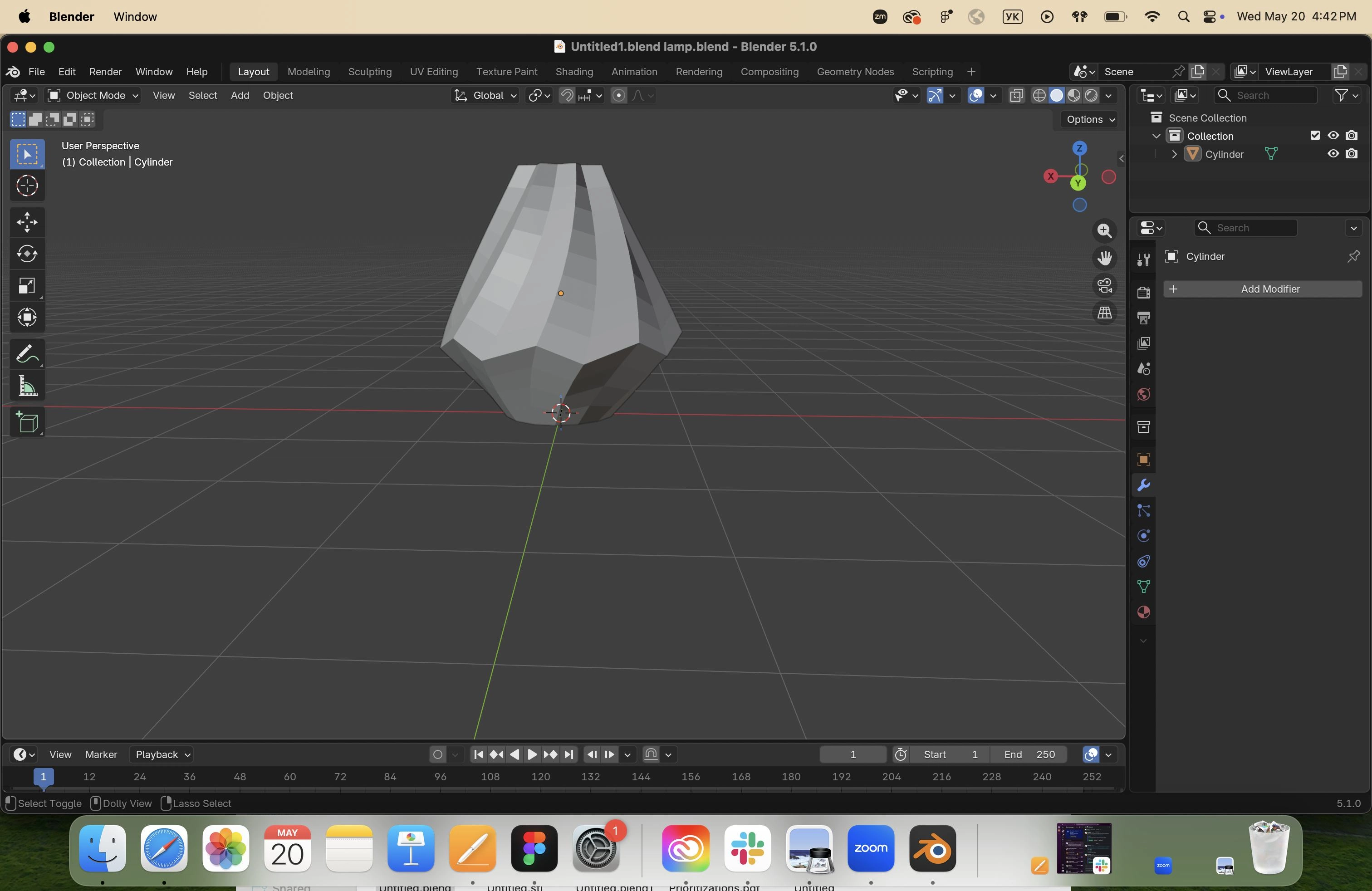
- Sketching & Modeling: AI-assisted pencil sketches via ChatGPT were used to explore shading and texture. In Blender, the lamp form was modeled from a 16-sided cylinder using scaling, loop cuts, and face deletions.
- Paper Prototyping: Paper unfold templates printed in the college lab were assembled into physical models, identifying the need for a wider middle profile.
- Interactive Circuit Logic: Sound-activation code was programmed on a CPX board connected to NeoPixel LED strips. A loud sound toggles ambient lighting on (tested in white and pink), and a subsequent sound turns it off.
- Refinement: Using Blender’s Simple Deform modifier, the geometric angles were twisted and wall thickness was added to ensure structural stability over the base.
Solution
Final Prototype
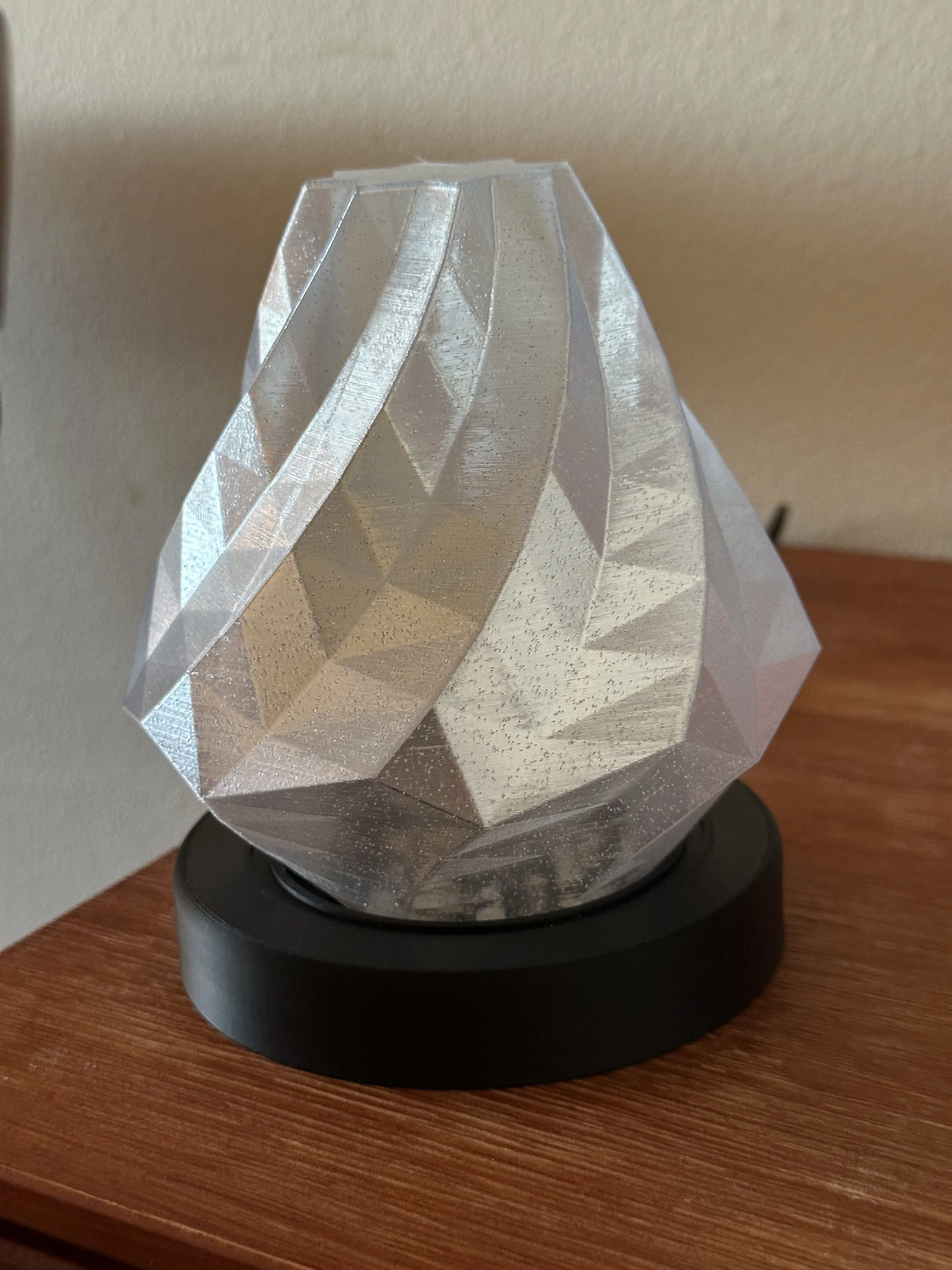
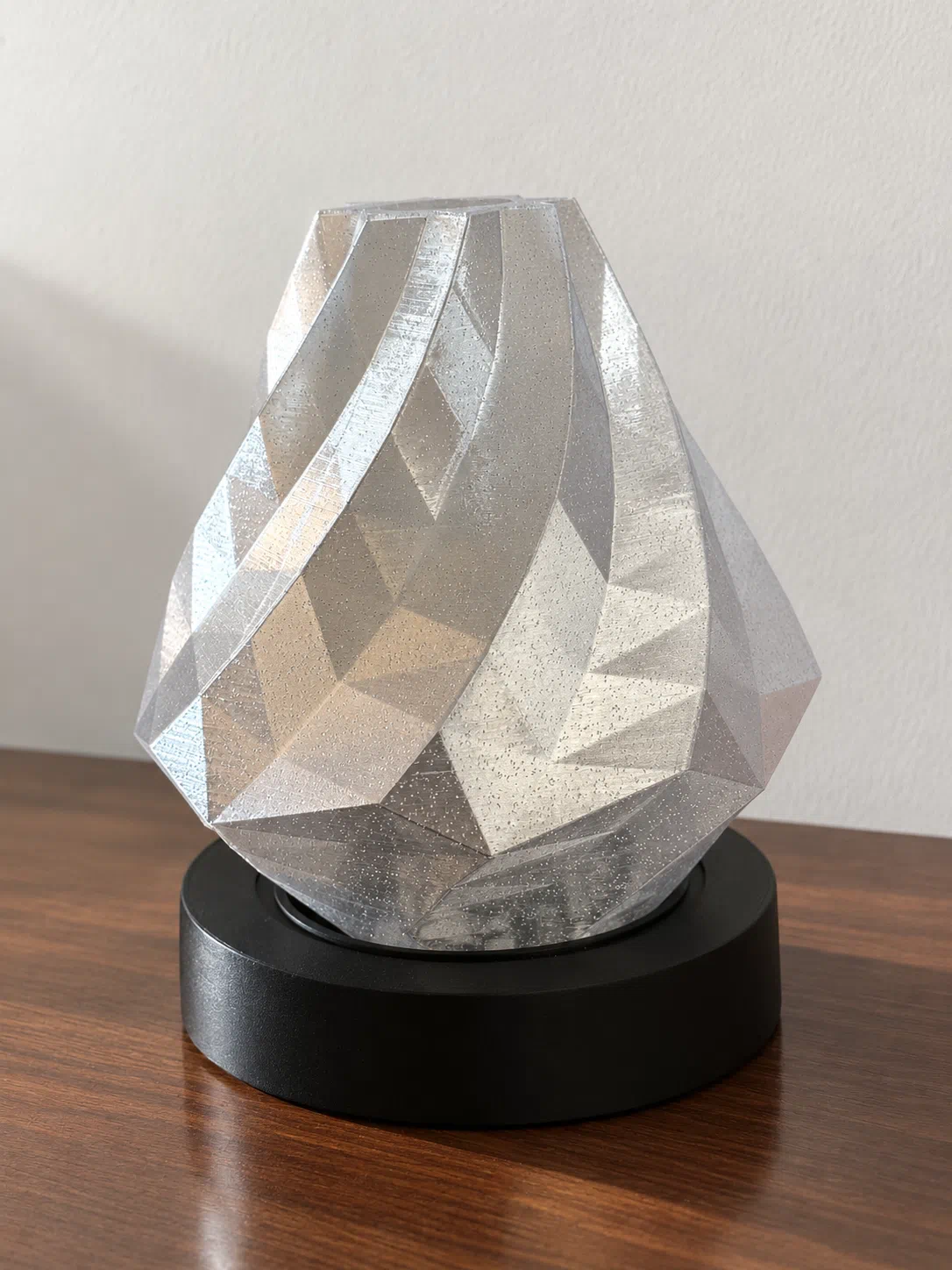
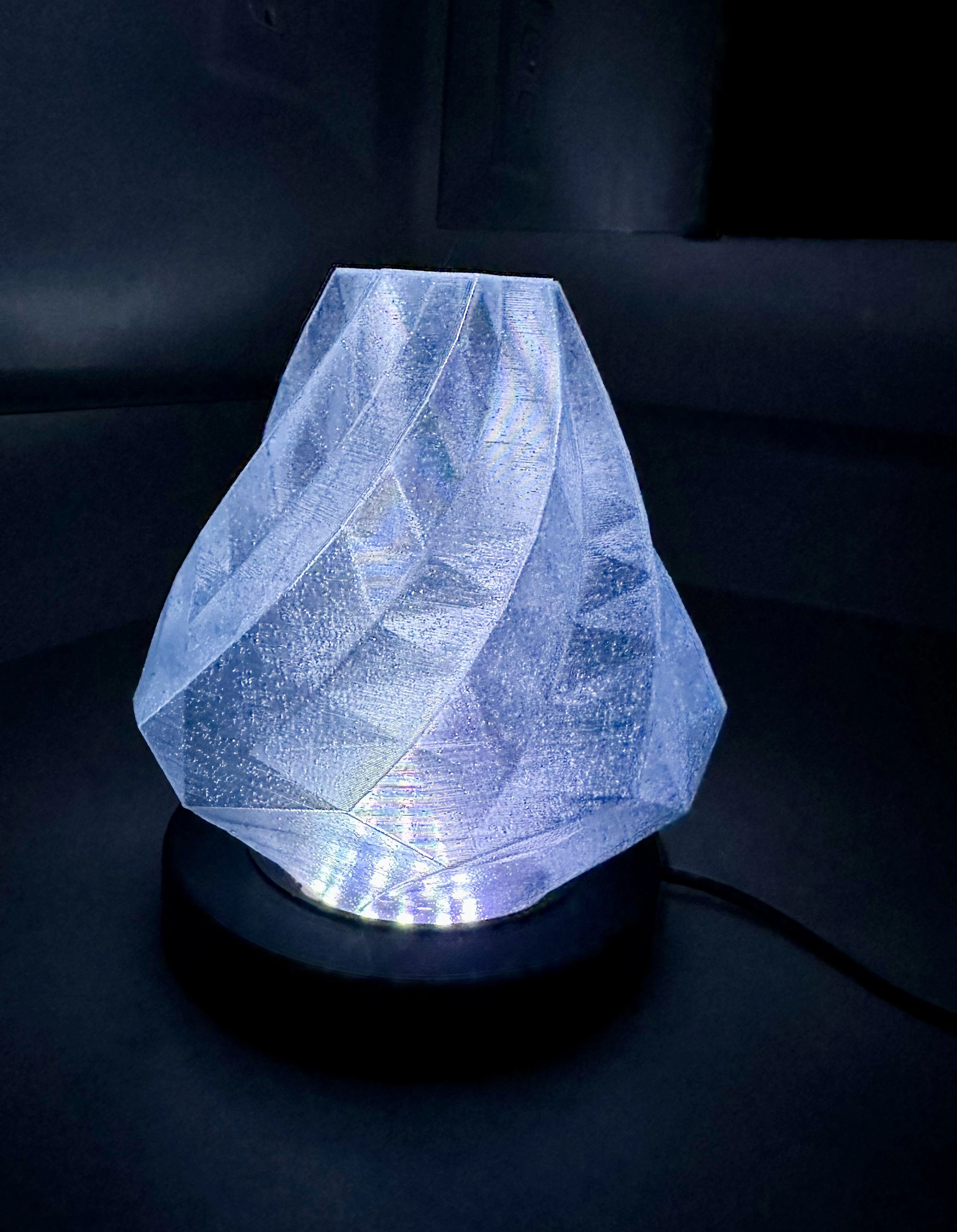
The completed build features a translucent 3D-printed faceted tulip lamp shade mounted atop a sleek black base. Embedded NeoPixel LEDs glow brightly through the geometric material, offering hands-free sound control.
Next
Outcomes & Synthesis
- Reflection: The final product successfully captures the graceful essence of a blooming tulip while offering practical interactive lighting functionality.
- Version 2.0 Plans: Future iterations will feature increased wall thickness for fuller volume, slightly larger overall dimensions, and enhanced surface textures.
See more work
The portfolio is deep. Keep moving. There is more to see and more to learn.